


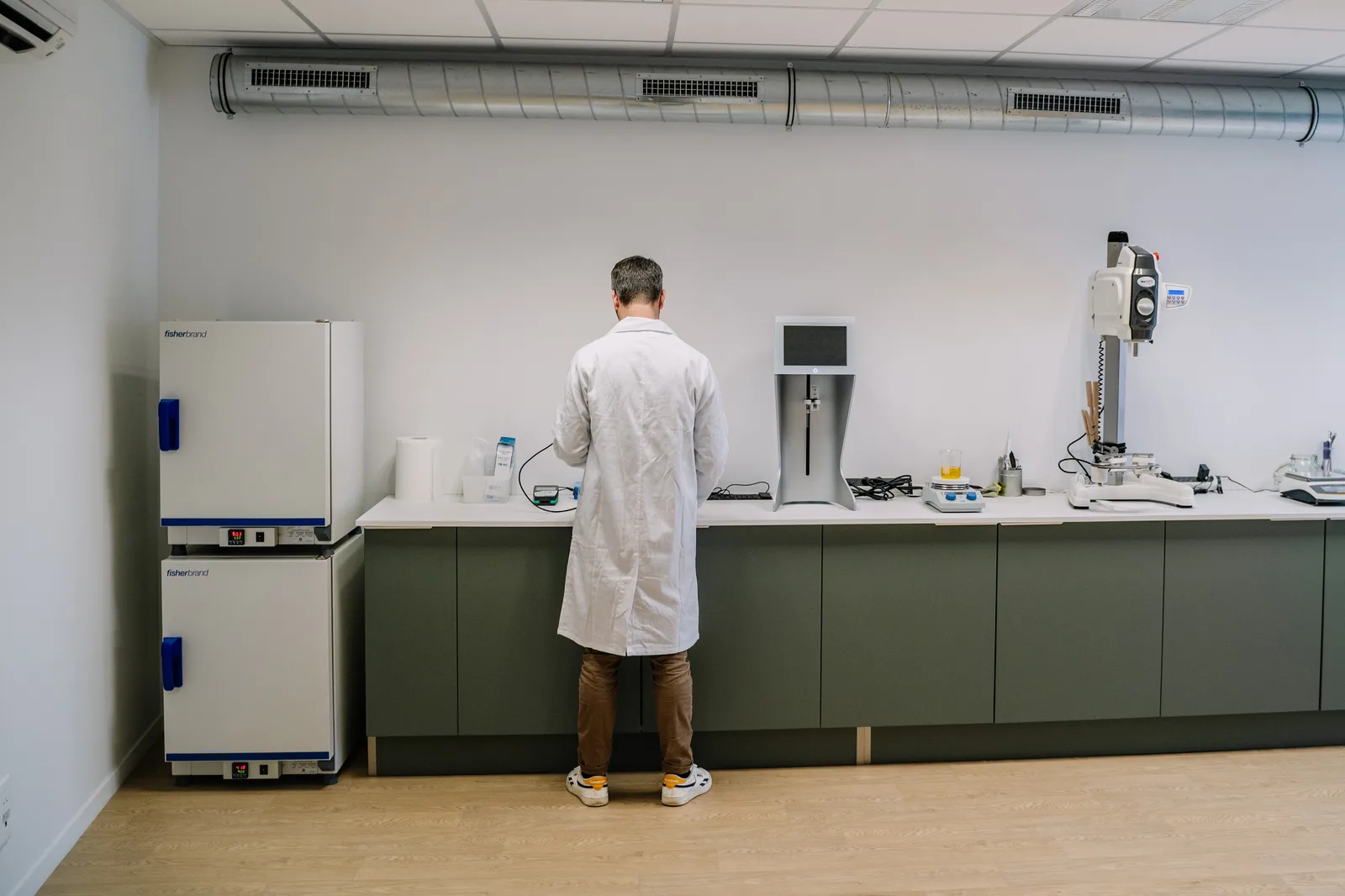

The cosmetics industry is constantly evolving, and demand for safe, high-quality beauty products keeps growing.
In this competitive context, the ISO 22716 standard plays an essential role as a set of Good Manufacturing Practices (GMP). Developed by the International Organization for Standardization (ISO), it is recognised worldwide and guarantees that cosmetics manufacturers meet rigorous quality and safety requirements.
If you plan to launch your own manufacturing laboratory, this guide details 7 fundamental steps to ensure compliance with the ISO standard and succeed in making your products. Understanding the regulations is crucial from the outset.
Step 1: Draft a quality plan
The first pillar of ISO 22716 compliance is a solid quality plan, including a clear, concise quality policy, specific quality objectives and the principles of your quality management system. This policy must be communicated to all staff and updated regularly. Some important points to consider:
- Define the objectives: clarify your business goals and desired outcomes (high-quality products, regulatory compliance, optimised processes).
- Allocate resources: precisely assess the resources needed, including equipment (such as a suitable mixer), raw materials, qualified staff and required skills. Plan a realistic budget.
- Plan the steps: divide the creation process into logical stages and define the specific actions for each.
- Assess the risks: identify potential risks (contamination, regulatory non-compliance) and develop effective mitigation strategies.
- Follow the NF ISO 22716 standard: familiarise yourself in detail with its requirements and integrate them into your quality plan.
Step 2: Train yourself (and your employees)
A well-trained team is absolutely essential to ensure GMP compliance. Some advice:
- Regulatory training: study the regulations in force in the cosmetics industry (good manufacturing practices, product labelling, safety requirements before market launch).
- Technical training: acquire or strengthen the skills needed for manufacturing, such as formulation, quality control and good laboratory practices.
- Management training: develop your business management skills to steer your activity effectively (operations, human resources, financial management).
- Ongoing awareness: train your employees on the crucial importance of hygiene, quality and safety in production, with regular sessions to maintain a high level of compliance.
Step 3: Choose a suitable premises
Choosing a suitable premises is essential to ensure the smooth operation of your production site. The manufacturing and packaging environment must be designed to prevent any product contamination. Some key points:
- Sufficient space: enough space for all the necessary facilities: production, storage (raw materials, packaging articles, bulk, finished products) and quality control zones.
- Compliance with safety standards: fire safety, appropriate ventilation, compliant waste disposal.
- Accessibility: the premises must be easily accessible to suppliers, employees and potential customers.
- Proximity to resources: assess the proximity of key suppliers (raw materials, packaging) and logistics services to optimise costs and efficiency.
- Suitable storage: products must be packaged and stored to preserve their quality, under controlled temperature and humidity conditions.
Step 4: Equip your production unit
Equipping your unit is crucial to ensure manufacturing quality and efficiency:
- Machines and equipment: select suitable machines (mixers, fillers, labellers, quality-control equipment). Ensure they are qualified and check them regularly.
- Raw materials: identify the raw materials and build strong relationships with suppliers, ensuring high quality. Reception is a controlled step.
- Ergonomic workspace: organise your space to optimise the efficiency and safety of operations.
- Management software: use suitable software to track operations (production management, product traceability, stock management).
Step 5: Set up a robust quality system
A documented quality system is essential to ensure ISO 22716 compliance:
- Documenting procedures: write clear procedures and instructions for each step (production, cleaning, maintenance, managing non-conformities, batch release). Document management is crucial.
- Quality controls: implement rigorous controls at all stages (raw materials, in-process, finished products) to verify compliance with specifications.
- Monitoring and analysing data: regularly collect and analyse test results, customer complaints and equipment performance to drive continuous improvement.
- Internal audit: carry out periodic internal audits to assess the effectiveness of your quality system and implement corrective actions.
“Product safety is an absolute priority. Set up a risk management system to identify, assess and control the potential hazards related to manufacturing cosmetic products.”
Step 6: Manage traceability
Complete documentation is essential for traceability and transparency. Meticulously record all production-related activities, from receiving raw materials to distributing finished products. A well-designed traceability system makes it possible to track each product throughout its life cycle, facilitating the rapid detection of problems and strengthening consumer confidence:
- Unique identifiers: use unique identifiers for each batch produced, to track products in the supply chain and trace their origin if a problem arises.
- Recording data: keep detailed, certified records of each step (raw materials used, procedures, test results, packaging information).
- Computerised management system: store and manage traceability data, facilitating the search and retrieval of information.
- Collaboration with suppliers: work closely with your suppliers so they also meet traceability standards and provide detailed information.
Step 7: Develop, verify and improve
The final step is to continuously develop, verify and improve your processes:
- Developing new products: keep developing new products to meet the market’s changing needs. Research trends and innovate to stay competitive.
- Verifying performance: carry out regular checks to assess the factory’s performance. Analyse data, run quality tests and assess customer satisfaction.
- Continuous improvement: set up a continuous improvement process, taking into account customer feedback, employee suggestions and audit results.
- Regulatory watch: follow updates to Regulation (EC) No 1223/2009 on cosmetic products. Always comply with new requirements and adapt accordingly.
By following these 7 steps, you will establish a laboratory capable of producing cosmetics that comply with the regulations in force. Creating a manufacturing unit is a rigorous but essential process to guarantee the quality, safety and consumer confidence in your products. Tailor-made support will let you stay completely serene in the event of a DGCCRF inspection.
